How to Find a Queer-Friendly Wedding Officiant
Last updated on October 16th, 2026
Finding a queer-friendly wedding officiant starts with looking for someone who genuinely celebrates LGBTQIA+ relationships, not just someone who’s willing to perform the ceremony. Start with LGBTQ+ wedding directories, recommendations from inclusive vendors, and local queer communities. Then, look through their work and ask questions about their experience, inclusive language, and ceremony style.
As a queer wedding and elopement photographer, I’ve worked with plenty of officiants and seen firsthand how much of a difference the right person can make. In this guide, I’ll walk you through where to look, what to ask, and how to find someone who makes you feel comfortable, respected, and celebrated.
TL;DR
- Start your search with LGBTQ+ wedding directories, recommendations from affirming vendors, and local queer communities.
- Look for genuine inclusivity. Review their website, past work, and language to find someone who celebrates your relationship, not just accepts it.
- Ask questions before booking. Discuss their experience with LGBTQ+ weddings, ceremony customization, pronouns, and expectations to make sure they’re the right fit.
What is a Queer-Friendly Officiant?
A queer-friendly wedding officiant or celebrant will lead your ceremony with genuine openness and acceptance, regardless of your identity. These people respect your pronouns and lived experiences and are enthusiastic about working with you to create a ceremony that reflects your and your partner’s love and values.
Generally, your wedding officiant will:
- Guide and instruct your guests.
- Write your ceremony script, typically sharing words about your love story.
- Facilitate your vows and other special elements you have planned on the big day, like exchanging rings, the “first kiss,” and the announcement of the official marriage.
- Sign the marriage licence with you, your partner, and your witnesses.

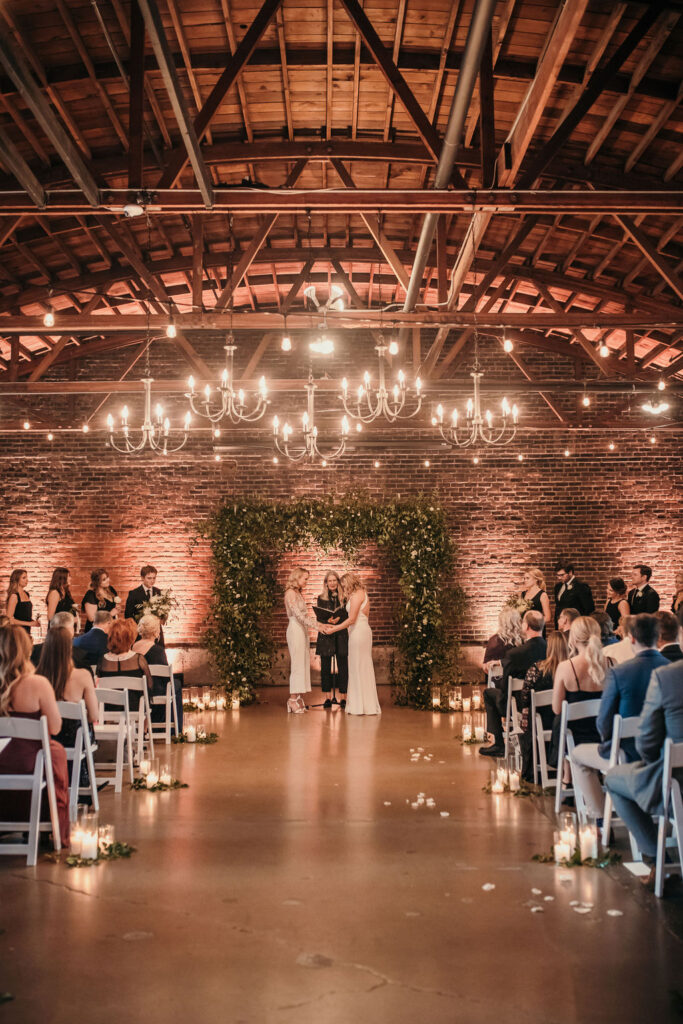

How to Find an LGBTQ+-Friendly Wedding Officiant: 5 Steps
Here are five steps to help you find a queer-friendly wedding officiant who’s the right fit:
1. Decide What Kind of Ceremony You Want
Before starting your search, think about what you want your ceremony to look and feel like. You don’t need to have every detail figured out, but knowing what’s important to you and your partner can help you narrow down your options.
A few things to consider:
- Ceremony style: Do you want something religious, spiritual, secular, or interfaith?
- Personalization: Would you prefer a traditional ceremony script or something written specifically around your relationship?
- Wedding size: Are you planning an intimate elopement, a small wedding, or a larger celebration?
- Traditions and rituals: Do you want to incorporate cultural traditions, readings, handfasting, or other meaningful rituals?
- Inclusive language: Are there specific words, pronouns, or traditions you want to use (or avoid)?
And remember, you don’t have to follow a traditional wedding ceremony structure just because it’s what you’re used to seeing. Your ceremony can look however you want it to, as long as you meet any legal requirements for getting married.
Read More: How to Create Unique LGBTQIA+ Ceremony Scripts
2. Search LGBTQIA+ Wedding Directories and Local Communities
Once you have a general idea of what you’re looking for, it’s time to start your search! One of the easiest ways to find queer-friendly wedding officiants is through LGBTQ+ wedding directories and recommendations from people within your community. Here are a few places to start:
- LGBTQ+ wedding directories: Websites like Equally Wed and LGBT Weddings can help you discover vendors who specifically market their services to LGBTQ+ couples.
- Local LGBTQ+ organizations: Community centers, Pride organizations, and queer-owned businesses may be able to point you toward officiants in your area.
- Online communities: Local LGBTQ+ Facebook groups, Reddit communities, and other queer wedding groups can be helpful for getting recommendations from couples who’ve been through the process.
- Google searches: Try searching for “LGBTQ+ wedding officiant near me,” “queer-friendly wedding officiant in [city],” or “LGBTQ+ elopement officiant in [state].”
One thing I’d keep in mind: Just because someone appears in an LGBTQIA+ wedding directory doesn’t automatically mean they’ll be the right fit for you. Think of these resources as a starting point, then take some time to get to know the officiants you’re considering.
3. Look for Signs of Genuine LGBTQIA + Inclusivity
There’s a difference between an officiant who’s willing to marry LGBTQ+ couples and someone who genuinely celebrates them. As you’re looking through websites, galleries, and social media, pay attention to how officiants talk about the couples they work with. Some positive signs include:
- Inclusive language: Their website and contact forms use terms like “partner” or “spouse” instead of assuming every couple has a bride and groom.
- Clear support: They openly communicate that LGBTQ+ couples are welcome and celebrated.
- Social media interactions: If the wedding officiant runs a social media account, look at who they interact with and how they approach these interactions.
- Thoughtful testimonials: Reviews from LGBTQ+ couples mention feeling comfortable, respected, and supported.
- Personalized ceremonies: They talk about getting to know each couple rather than relying on the same traditional script for everyone.
That said, gallery photos don’t always tell the whole story. An officiant who’s newer to the wedding industry might not have worked with many queer couples yet. Others may have officiated LGBTQ+ weddings but don’t have permission to publicly share photos.
I wouldn’t automatically rule someone out because their portfolio lacks representation. Instead, pay attention to how they respond when you ask about their experience, values, and approach to LGBTQ+ ceremonies.
And if you’re not comfortable being someone’s first queer wedding, that’s completely okay, too.
4. Ask Questions Before Booking
Once you’ve found a few officiants you’re interested in, reach out and start a conversation. Their answers can tell you a lot about whether they’re genuinely affirming and whether their approach fits what you’re looking for.
You don’t need to ask every question below, but these are some good ones to consider.
On Experience and Inclusivity:
- Have you officiated LGBTQ+ weddings before?
- How do you make sure your ceremonies feel inclusive and affirming?
- Are you comfortable using our preferred names, pronouns, and relationship terminology?
- How would you handle a situation involving unsupportive family members or guests?
On Ceremony Customization:
- Can we review and approve the ceremony script before our wedding?
- Can we write our own vows or include meaningful readings and rituals?
- How do you personalize ceremonies to reflect each couple’s relationship?
- Are you comfortable creating a nontraditional ceremony that doesn’t follow typical wedding roles?
On Logistics and Expectations:
- Are you legally authorized to officiate weddings in our chosen location?
- What’s included in your pricing? Are there additional travel fees?
- Do you officiate elopements, outdoor weddings, or destination ceremonies?
- What happens if you’re unable to attend on our wedding day?
Remember, this conversation shouldn’t feel like you’re trying to convince someone to respect your relationship. You’re getting to know a potential vendor and figuring out whether they’re the right person to help you celebrate it.
5. Meet Your Officiant and Confirm Details
Before making your final decision, I’d recommend scheduling a meeting or video call with your potential officiant. Websites and emails can tell you a lot, but having an actual conversation can help you get a better sense of their personality and how you’ll work together.
Ask yourself: Do they listen when you talk about your relationship? Are they excited about your ideas? Do you feel comfortable asking questions or expressing your preferences?
You should also confirm the practical details before signing a contract:
- Their availability for your wedding date and location
- Their travel policies and any additional fees
- What services are included, such as script writing, rehearsals, and marriage license paperwork
- Whether they’re legally authorized to officiate at your ceremony location
- Their cancellation policies and backup arrangements.
Most importantly, trust your instincts. If something feels off or you’re uncomfortable with how someone approaches your identities or relationship, you’re allowed to keep looking.
Your officiant will be standing alongside you during one of the most meaningful parts of your wedding day. You deserve someone who helps you feel relaxed, respected, and genuinely excited to get married.

Red Flags to Watch for When Choosing an LGBTQ+-Friendly Officiant
Not every officiant who says they’re LGBTQ+-friendly will necessarily be the right fit for you. And while someone doesn’t need to know everything about the queer community to be affirming, they should be willing to listen, learn, and respect your boundaries. Here are some red flags I’d look for:
- Misgendering or using incorrect names: Mistakes happen, but repeatedly using the wrong names or pronouns after being corrected is a concern.
- Making assumptions about your relationship: Assuming one of you is the “bride” or “groom,” assigning traditional gender roles, or asking invasive questions about your identities.
- Treating LGBTQ+ weddings differently: Describing queer weddings as something unusual or making you feel like your relationship is an exception to their normal services.
- Refusing to personalize your ceremony: Insisting on gendered language, religious elements, or traditions that don’t reflect your relationship.
- Dismissing your boundaries: Brushing off concerns about unsupportive family members, privacy, or how you want your relationship represented during the ceremony.
What if I Can’t Find an LGBTQ+-Friendly Officiant?
Sometimes, even after researching and reaching out, you might struggle to find an officiant who feels like the right fit. Maybe you’re getting married somewhere remote, your options are limited, or you simply haven’t connected with anyone yet.
The good news? You still have options!
1. Expand Your Search
If you’re not finding anyone locally, try looking in nearby cities or asking LGBTQ+-friendly wedding vendors for recommendations. Some officiants are happy to travel, especially for elopements and destination weddings. You can also reach out to local LGBTQIA+ organizations or online communities to see if anyone has personal recommendations.
2. Ask Someone You Trust to Officiate
Having a close friend, family member, or someone from your chosen family officiate can make your ceremony feel even more personal.
Depending on where you’re getting married, they may be able to legally officiate after completing the necessary requirements. Some states allow online-ordained officiants, while others may have different registration or authorization processes.
Make sure to check the marriage laws where you’re getting married before committing to this option.
3. Have a Courthouse Ceremony and Celebrate Later
If finding an affirming officiant is proving difficult, you can always separate the legal paperwork from your personal celebration.
For example, you could get legally married at a courthouse or through an authorized officiant, then exchange your vows during a private elopement or symbolic ceremony somewhere meaningful to you.
This can be especially helpful for destination elopements, where marriage laws and officiant requirements might be different from what you’re used to.
Overall, I want you to remember that your ceremony doesn’t have to look a certain way to be meaningful. Whether you hire a professional, ask someone you love, or celebrate privately after completing the paperwork, what matters is that you feel comfortable, supported, and free to celebrate your relationship on your terms.
LGBTQ+-Friendly Officiant FAQ
Finding the Right People for Your Wedding
Your wedding should be a celebration of your relationship, and the people standing with you should make you feel comfortable and supported. Whether you’re planning an intimate elopement, micro wedding, or a larger ceremony, you deserve an officiant who genuinely uplifts you.
And that goes for your other wedding vendors, too! As a queer wedding and elopement photographer, I’m passionate about creating an affirming space where you can simply be yourselves. If you’re looking for someone to document your big day, I’d love to connect!

Anna (she/her) is a queer elopement and wedding photographer with nearly a decade of experience, 200+ weddings, and 40+ elopements behind her. Her work has been featured in Wandering Weddings, recognized by Junebug Weddings, and praised with 50+ 5-star reviews. Shaped by her own lived experiences and relationship within the LGBTQIA+ community, Anna is passionate about creating inclusive, affirming spaces for queer couples. For her, documenting love is about visibility, connection, and community. Each adventure leaves a mark—literally—as she commemorates the couples and stories she’s honored to capture with tattoos from her travels.